
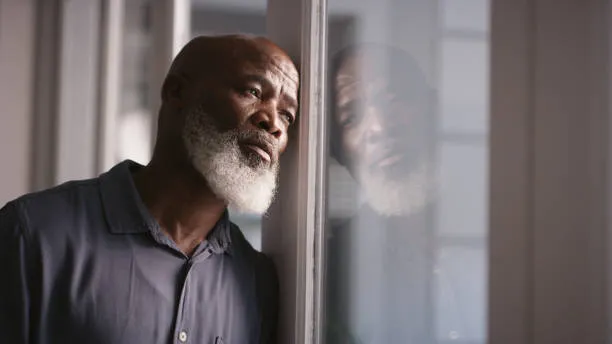
You’re carrying grief that no one can see.
But it’s not for someone who died. It’s for the childhood you never had, the safety you never felt, the version of yourself that never got to exist.
Did you know that this invisible weight shapes every relationship, every decision, every moment of your life?
The problem is that society offers no funeral for dreams that died before they could bloom, no sympathy cards for the loss of what should have been. So, the question is – how can you take real, active steps toward healing and self-love?
The Power of Ambiguous & Unseen Grief
Grief extends far beyond death into territories our culture rarely acknowledges.
When you think about it, this grief lives in the space between what was and what should have been.
- It’s in the emotionally absent parent who was physically present
- It manifests in the childhood that ended at age seven when you became the family caretaker
- It’s found in the identity you never got to explore because survival took all your energy
This ambiguous grief defies neat categories, existing in the shadows where loss can’t be clearly defined or socially recognized.
Ambiguous grief encompasses the profound losses that leave no visible evidence: unmet childhood needs for safety and nurturing, dreams deferred or destroyed by circumstance, time lost to trauma or survival, and the core sense of self that never fully developed.
Research shows that these invisible losses create the same neurological and physiological responses as death-related grief, yet without the social recognition that facilitates healing.
Your body and brain process the loss of emotional safety with the same intensity as physical loss, but without a framework for understanding or expressing it.
The Grief of What Should Have Been
Think about the phrase “what should have been.”
That single phrase carries immense weight for those navigating unseen loss.
- Every child should have felt safe in their home, yet millions grew up scanning for danger.
- Every person should have had their emotional needs met, yet emotional neglect affects an estimated 1 in 7 children.
- Every individual should have had the chance to discover who they are, yet countless people lost their identity to family dysfunction, poverty, or systemic oppression.
This grief manifests as a persistent ache for experiences that never occurred: the graduation your parents didn’t attend because they were too consumed by their own pain, the teenage years spent working instead of exploring, the sense of belonging that never materialized.
You might find yourself grieving the relationship with a living parent who was never capable of true connection, or mourning developmental milestones that passed unnoticed and uncelebrated.
A mental health platform that validates these losses becomes essential for healing what traditional therapy often overlooks.
How Invisible Grief Shows Up
Because unseen grief lacks social recognition, it often morphs into seemingly unrelated symptoms that confuse both the sufferer and those around them.
Seeing and defining these manifestations helps connect mysterious struggles to their grief-based roots.
Irritability and Emotional Volatility
The nervous system, overwhelmed by unprocessed loss, becomes hyperreactive. Small frustrations trigger disproportionate responses because the grief beneath has no outlet.
You might find yourself snapping at loved ones or feeling rage over minor inconveniences, not realizing you’re actually grieving the patience and emotional regulation you never got to develop in a chaotic childhood.
Detachment and Numbness
When grief becomes too overwhelming to feel, the psyche shuts down emotional processing entirely.
This protective numbing might manifest as difficulty connecting with others, feeling like you’re watching life from outside your body, or an inability to access joy even in positive moments.
This isn’t depression exactly – it’s the soul’s attempt to avoid touching wounds that feel too vast to survive.
Overachievement and Perfectionism
Some channel grief into relentless productivity, unconsciously trying to earn the love and safety that should have been freely given.
Every achievement becomes an attempt to fill the void left by unmourned losses. A personal growth platform should offer more ways to improve without addressing the grief driving the compulsion.
Shutdown and Freeze
Others respond to invisible grief by freezing – unable to move forward because they’re still waiting for what never came.
This might look like chronic procrastination, inability to make decisions, or feeling stuck in life patterns that no longer serve.
The body remains in a state of waiting for safety that never arrived, for parents who never showed up emotionally, for a childhood that’s now impossible to reclaim.
How Collective & Generational Trauma Plays a Role

Individual grief never exists in isolation. The reality is that it’s layered within collective and generational trauma that shapes entire communities.
Your personal losses intersect with historical wounds carried by your ancestors, cultural grief from systemic oppression, and shared traumas that affect your entire generation.
These overlapping griefs create complex emotional landscapes where personal pain becomes inseparable from collective suffering.
Think about generational trauma as being passed down through families like invisible heirlooms.
The grandmother who survived war passes down hypervigilance.
The parent who experienced poverty transmits scarcity mindset.
The community that endured displacement carries rootlessness in its DNA.
Research in epigenetics now confirms what communities have long known: trauma literally alters genetic expression, meaning you might be grieving losses that occurred before you were born.
Growing Up Too Fast: The Theft of Childhood
Millions grieve childhoods that ended too soon.
Whether from poverty requiring early employment, family dysfunction demanding premature emotional maturity, or systemic factors forcing early self-protection, the loss of childhood innocence represents a profound grief rarely acknowledged.
Children who become family translators, emotional caretakers, or household managers before age ten lose something irreplaceable – the right to be young, protected, and carefree.
This stolen childhood creates adults who can’t play, rest, or trust. They might achieve impressive professional success yet feel empty because their achievements came at the cost of developmental experiences everyone deserves.
Social emotional learning in adulthood becomes about grieving and reclaiming these lost parts, learning to play at forty what you should have learned at four.
Systemic Losses: When Society Fails You
Entire communities carry grief from systemic failures that prevented normal development and thriving.
Redlining that destroyed generational wealth, educational systems that failed to nurture potential, healthcare systems that ignored pain. Each of these creates collective wounds that individuals carry without always understanding their source.
You might be grieving opportunities that were systematically denied to your parents and grandparents, carrying the weight of dreams deferred across generations.
The COVID-19 pandemic added new layers of collective grief that we’re only beginning to understand. Lost years of social development for children, careers derailed, relationships that couldn’t survive isolation.
These losses happened to millions simultaneously, yet each person processes them alone. A healthy lifestyle community becomes crucial for processing these shared yet individually experienced losses.
Unprocessed Grief = Emotional Congestion

Unprocessed grief doesn’t disappear. It may feel like it does, but the reality is that it actually migrates into the body, creating what researchers now recognize as emotional congestion.
Like a river blocked by debris, emotions meant to flow through us become trapped, creating pressure that manifests as physical and psychological symptoms.
Studies reveal that chronic, unexpressed grief activates inflammatory pathways identical to those triggered by physical injury, literally making emotional pain physically real.
The body stores grief in predictable patterns:
- Chest tightness and breathing difficulties often hold the grief of lost love and connection
- Chronic jaw tension contains words never spoken, boundaries never set
- Digestive issues frequently correlate with “swallowing” emotions that couldn’t be expressed
- Lower back pain might carry the burden of responsibilities assumed too young
These aren’t metaphorical connections. There has been brain imaging done that shows that emotional and physical pain activate identical neural pathways.
When Grief Becomes Anxiety and Depression
Would you believe that unmetabolized grief frequently masquerades as anxiety or depression? It often leads to misdiagnosis and incomplete treatment.
The anxiety might actually be your nervous system still scanning for safety it never received. The depression could be shut down from grief that is too overwhelming to feel. Without addressing the underlying losses, traditional treatments often provide only partial relief.
Autoimmune conditions increasingly correlate with unresolved trauma and grief. The immune system, confused by chronic emotional inflammation, begins attacking the body itself.
This is a physical manifestation of internal conflict about losses that can’t be reconciled. Mental health education that connects these dots helps people understand their symptoms as grief responses rather than personal failings or mysterious illnesses.
Permission to Grieve + Pathways to Healing
The first step in healing invisible grief is radical validation: your losses are real, your pain is legitimate, and you have the right to grieve even if no one else understands.
Hear this: You don’t need anyone’s permission to mourn the childhood you deserved, the safety you should have had, or the person you might have become under different circumstances.
This grief deserves the same respect as any other loss.
Society’s discomfort with ambiguous grief often leads to minimization:
“At least you survived!”
“Listen, others had it way worse.”
“Just focus on the positive.”
These responses may be well-intentioned, but they become secondary wounds that compound the original loss. A platform for social impact that normalizes invisible grief creates space for healing that conventional support systems often deny.
Personal Rituals for Unseen Loss
Creating rituals for invisible losses helps the psyche process what logic cannot resolve.
- Writing letters to your younger self acknowledges the child who deserved protection.
- Creating a memorial for dreams that died honors what might have been.
- Holding a ceremony for the childhood that ended too soon gives form to formless grief.
These somatic practices prove particularly powerful for releasing grief stored in the body. Conscious breathwork can release chest-held grief. Body work that addresses chronic tension patterns can unlock decades of frozen grief.
These therapeutic techniques can become acts of reclamation, taking back agency over a body that learned to hold rather than express.
Collective Healing Spaces
Here’s what makes healing tough: individual healing has limits when addressing collective wounds.
That’s why grief groups designed for invisible losses create revolutionary spaces where the unseen becomes witnessed. Community storytelling circles where people share losses rarely spoken create validation through shared experience.
These collective healing spaces challenge isolation. They help treat secondary trauma that compounds invisible grief.
Because when you hear others name losses you thought were yours alone, shame dissolves into shared humanity. A healthy lifestyle community that prioritizes collective healing recognizes that some wounds are too large for individual therapy alone.
Integration Over Closure
The myth of closure keeps people trapped, waiting for grief to end rather than learning to integrate it.
Invisible losses often can’t achieve closure – you can’t reconcile with parents incapable of change, retrieve lost years, or experience the childhood that passed. Integration means making space for grief as a lifelong companion rather than an enemy to defeat.
This integration transforms grief from an obstacle into a teaching opportunity. Time lost to survival cultivates deep appreciation for present moments. Social emotional learning through grief creates emotional depth impossible without loss – and that’s worth embracing.
Moving Forward: Living with Invisible Scars
Healing invisible grief doesn’t mean forgetting or forgiving what shouldn’t have happened.
It means learning to hold both grief and joy, loss and possibility, what was and what still might be. Your invisible losses shape – but don’t define – you.
They’re part of your story. But critically, they aren’t your story’s conclusion.
The path forward requires community recognition that invisible grief deserves the same support as visible loss.
Workplaces need bereavement policies that acknowledge losses beyond death. Educational systems need curricula that validate diverse grief experiences. Healthcare must recognize grief’s role in physical and mental illness.
Most importantly, we need a cultural shift that sees grieving what never was as sacred work, not weakness.
Every person processing invisible loss is doing the heroic work of metabolizing pain that could otherwise pass to the next generation. Your grief work is social-emotional learning for entire communities.
AlignUs Is Here To Help
At AlignUs, we’re creating the online community that so many need. We believe that everyone deserves support, validation, and resources as they navigate the complexities of invisible grief.
Through our platform, users can connect with others who have experienced similar losses and share their stories.
Whether it’s connecting with another person who has lost a loved one to mental illness or finding resources for coping with the pain, AlignUs is here to provide a safe and supportive space. Together, we believe in the power of sharing, listening, and learning from one another.
Ready to honor your invisible losses and find community in healing? Join AlignUs to access resources, rituals, and connection with others navigating unseen grief. Because your losses matter, your grief is valid, and you don’t have to carry this alone.